Not getting board-level buy-in for L&D?
People running for the hills whenever you approach them about learning?
Sound familiar?
It's tough being a modern-day L&D leader, especially in an era of economic uncertainty, disillusioned employees, and a rapidly-changing skills landscape.
Budgets are low, pressure to retain and develop staff is high, and employees are more disconnected than ever.
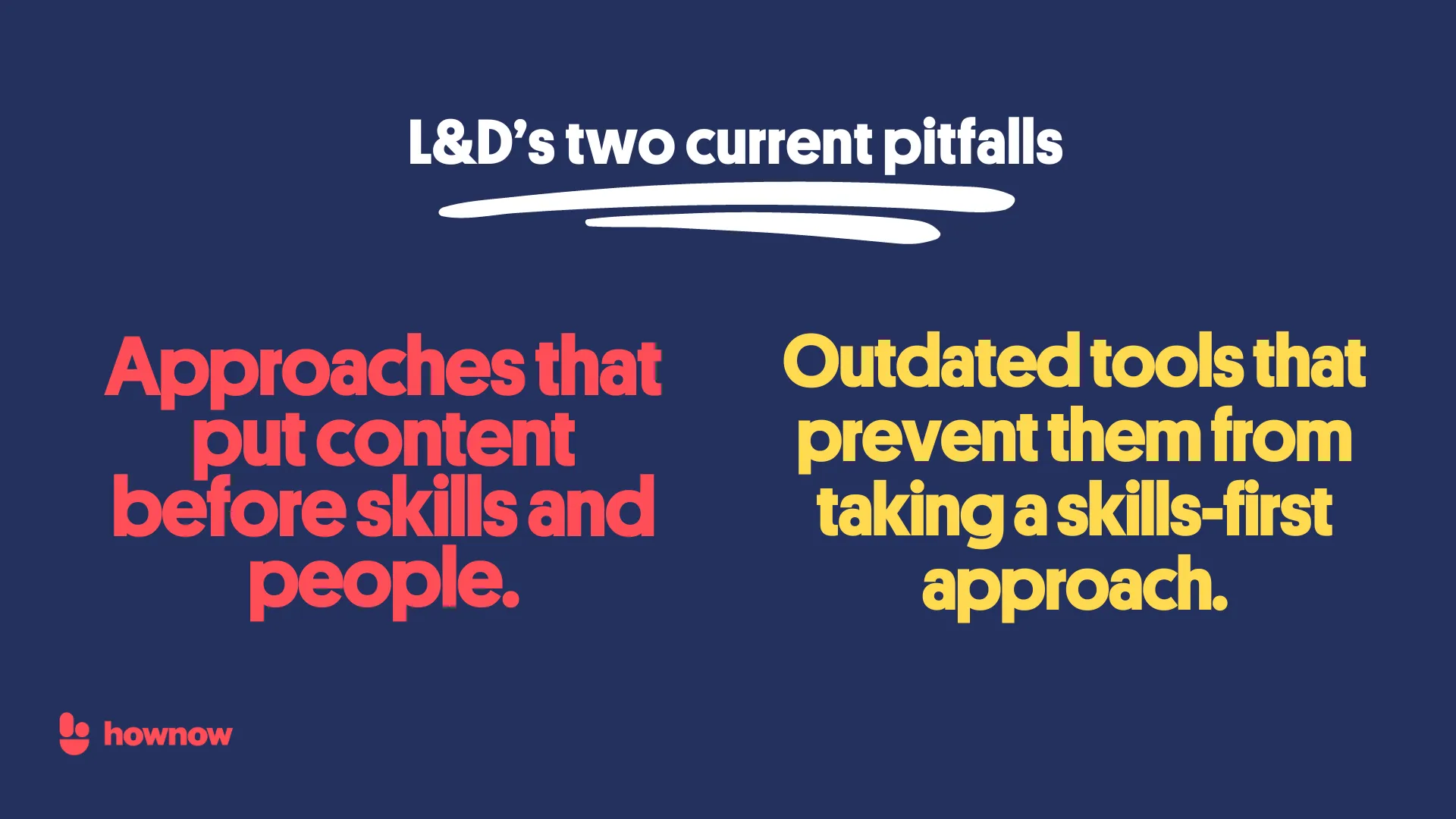
And there are two big problems behind all this pain:
1. Approaches that put content before skills and people.
2. Outdated tools that prevent L&D teams from taking an engaging, skills-first approach.
LMS, we’re talking about you!
Disconnected from the tools where people work, unable to truly personalise or collaborate on learning, and incapable of providing a central place for development - the traditional LMS just ain't cutting it anymore…
But this report isn't a bunch of hand-wringing and despair. Think of ‘The Death of the LMS’ guide as a breath of fresh air in a stale, outdated world of L&D.
People teams need a new approach and better technology to drive impact.
This guide gives you both!
It’s out with the old tools, in with the new approach, and ultimately, that means impact and engagement through learning.
Goodbye LMS. It’s time for something built around how we learn now…
For the first time ever, despite an economic downturn, the demand for talent remains high – with the US, Europe, and Canada seeing their lowest unemployment rate in nearly 50 years.
So, what’s the issue?
Well, despite AI dominating your social and news feeds, it’s not that robots are taking all the jobs….
It’s that there aren’t enough skilled humans to fill them!
And businesses are currently like a revolving door for skilled workers. Unable to hire the skills they need, lacking confidence in their ability to upskill the staff they’ve kept, and unable to retain top talent once they find it due to a lack of growth opportunities. It’s a vicious cycle.
It’s not just a case of hiring talent to plug the gaps - we can’t buy or borrow the skills we need forever, it’s not sustainable. So, we have to build them.
The companies who help their people build the skills that matter in the shortest time win the talent war. Which means they’re able to seize opportunities and grow at speed…
So, how do we attract top talent, retain our existing workforce and learn at speed?
It’s time for a new approach, don’t you think?
Think about the last time you learned something that had a significant impact on your career.
It probably came from a podcast, colleague or YouTube video, but we can almost guarantee it wasn’t your LMS.
So why do we spend so much time, money, and effort on LMSes?
Learning is scattered across an ecosystem of skills, experts, and content from inside and outside your organisation.
It’s no longer about a single platform, and someone needs to bring this all together like the conductor of an orchestra.
People are learning with or without L&D’s involvement, and it means we need a new role, mindset and technology stack.
In fact, there’s a fair argument that it has little influence on our performance at all.

In the wise words of Filip Lam, People Growth and L&D Expert:
“You shouldn’t be forcing people to come to your channel, learning should exist in the channels people already operate in.”
“Where people are reading, chatting, and working, that’s where you need to be to reach them. If a company uses Slack, for example, you can use that as the communication tool but also almost like a learning tool… and they don’t need to change to another environment.”
The current problem is that we have two competing issues:
If we create that central ecosystem, people can search for and find learning opportunities when they’re most motivated to solve problems (in the flow of work!).
We call these ‘moments that matter’: situations where connecting someone to the right content shapes their performance. This will, in turn, create a positive feedback loop around learning and drive engagement.
If you can’t measure skills, how do you know where the skills gaps are (and if you’ve closed them)?
You don’t! And this is one of the biggest issues facing L&D.
If you’ve got no way of measuring skills, you’re not going to prioritise that in your L&D strategy or learning experiences.
And in a classic case of the tail wagging the dog, this often causes companies to prioritise the consumption of content over the development of skills…
“This content's great, I can’t believe nobody is engaging with it!”
We can. Because the content-first approach isn’t working. It’s one-size-fits-all and reactive, delivering content at times when it’s not immediately relevant.
And that makes learning feel like an unwanted interruption! Even worse, an interruption that does little to build, track and measure skills, giving little influence over performance.
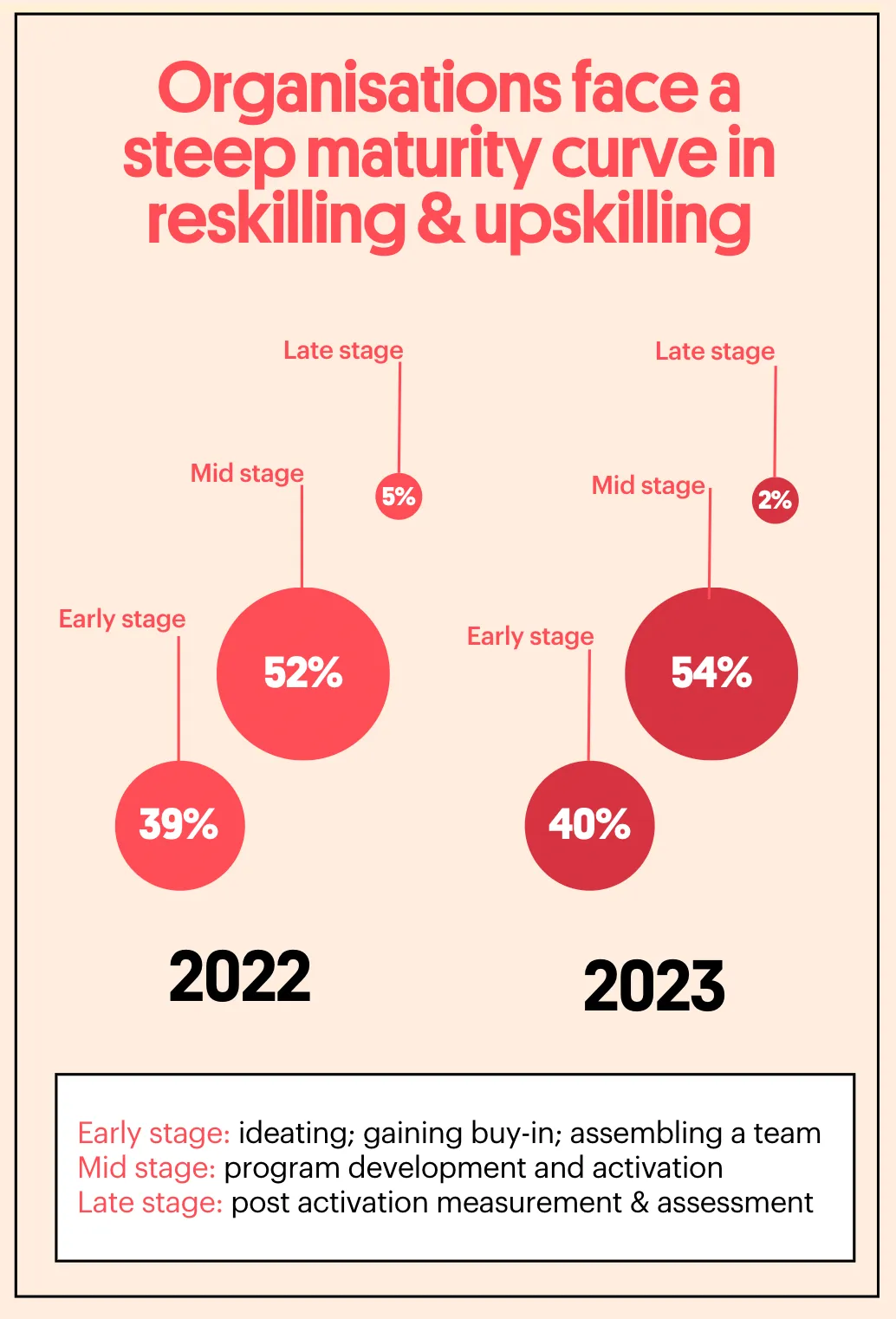
The numbers speak for themselves:
So, what if there was a better way?
It's time to take a skills-first approach - the common language that business speaks.
According to Laura Overton, Founder, Towards Maturity:
“For L&D to add value to the skills agenda, we need to look at more than reporting. Skill building – ensuring that individuals are genuinely equipped and ready – involves more than sharing new knowledge, it involves transfer of learning in the workplace, practice, building confidence and capability."
“If L&D wants to be known for our role in this, we need to define how and where we can add value back into that process. We then need to define with our stakeholders what success will look like and determine the leading and lagging indicators we need to track."
The good news is that winning L&D teams are starting to get buy-in for skills-first learning initiatives. The bad news is that they don't have access to the tools to effectively assess and measure the impact of them.
And this is often because they’re not putting skills first! If they were, that measurement and assessment would be baked into every learning experience. To drive change, we need a mindset shift.
You think we’d spend all that time telling you an LMS no longer works and not offer an alternative!?
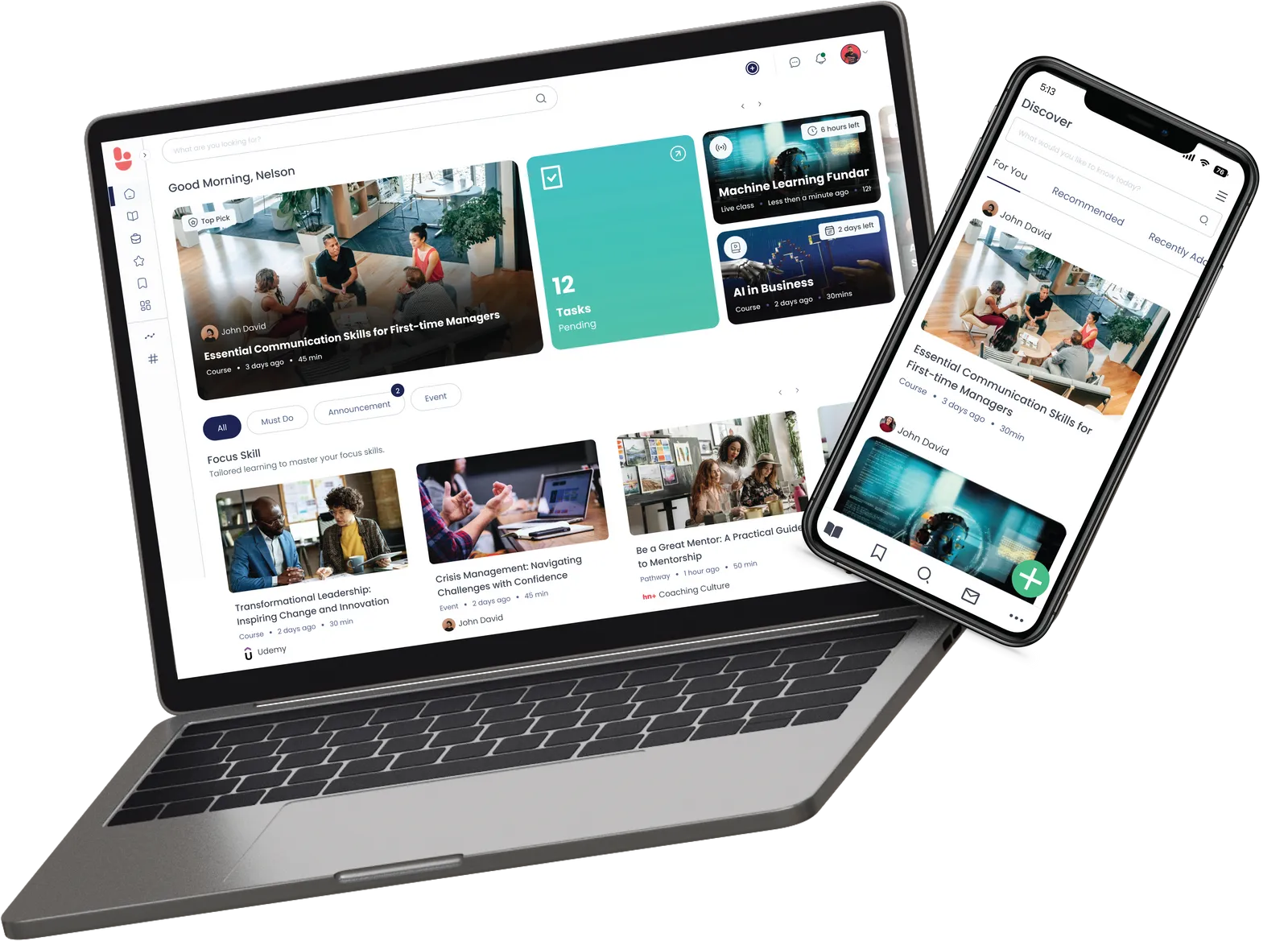
We built the HowNow learning experience platform to solve both the employee and L&D team’s problems - and help companies go from interruptive learning to uninterrupted growth.
Bringing skills-first learning to life looks a lot like this, and there are three key considerations.
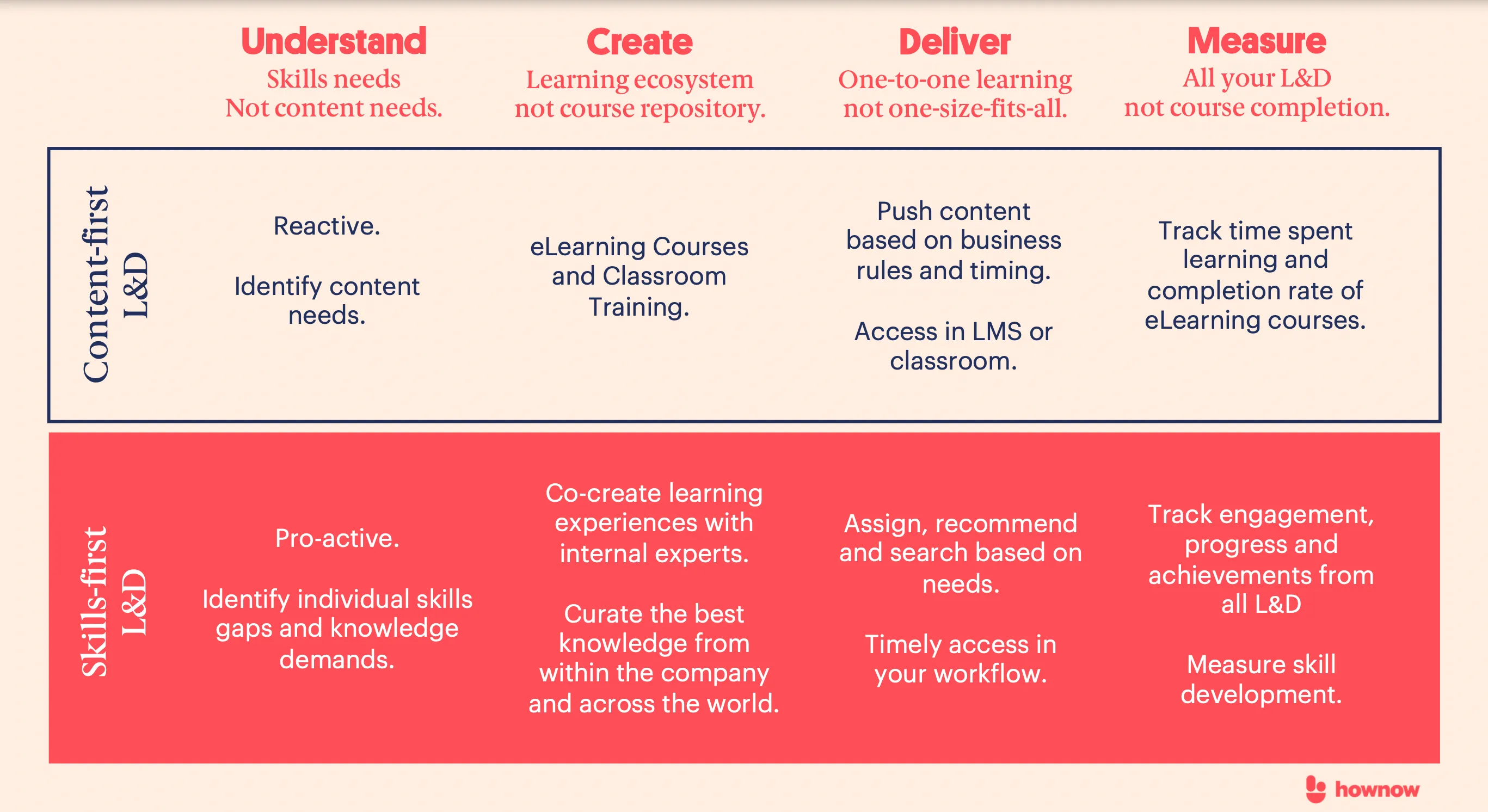
HowNow goes way beyond completion data and compliance percentages. We’ll give you insights into topics that engage people and what teams are searching for, helping you build a data-led approach to filling knowledge gaps.
Plus, our popular skills show you what’s trending and build learning focused on those talents.
To take a skills-first approach you must measure skills and understand where gaps exist.
HowNow goes even further, allowing you to map skills to content: from courses to live classes and snappy videos to podcast-style audio. Giving learners better recommendations and more proactive suggestions based on their skill needs.
Our Content Curation Service works with you to carefully curate the HowNow+ learning resources for your most in-demand Skills and topics - a guaranteed recipe for sweet L&D success.
HowNow uses AI to suggest skills based on a new starter’s role, pulling data from live job listings to build a comprehensive skills profile for that position.
Beyond day one, track skill development over time on an individual, team or, company level using our skill reporting features. Coupled with an endorsement workflow and peer reviews to give social proof to skill-building.
HowNow helps every employee build the skills they need to grow with relevant learning in the flow of work.
From centralising all your learning in one place and integrating that with the apps you use every day, to helping you measure skills and build profiles for every employee, HowNow empowers you to deliver a skills-first approach to L&D.
Speak to one our our learning experts today 👇